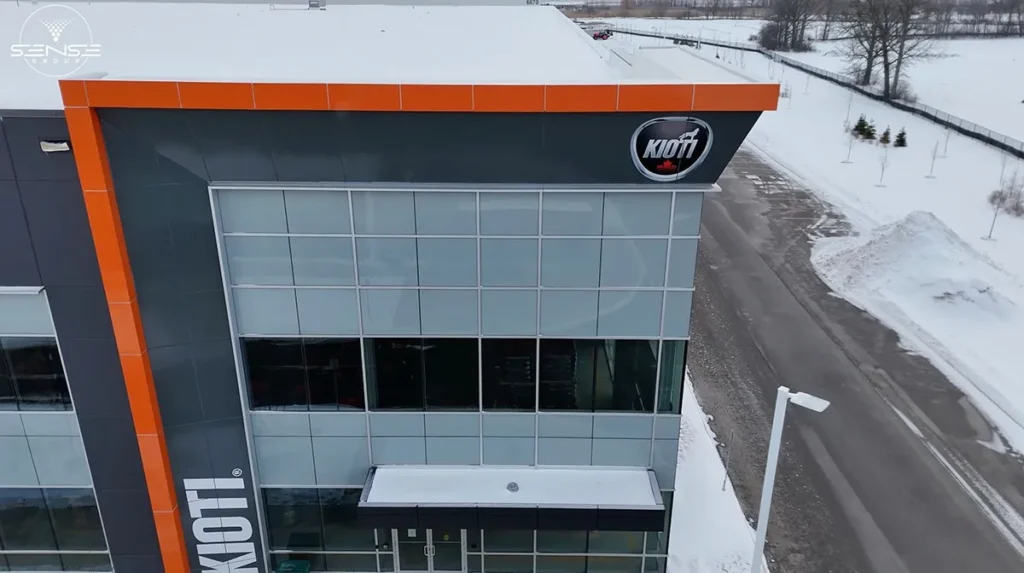
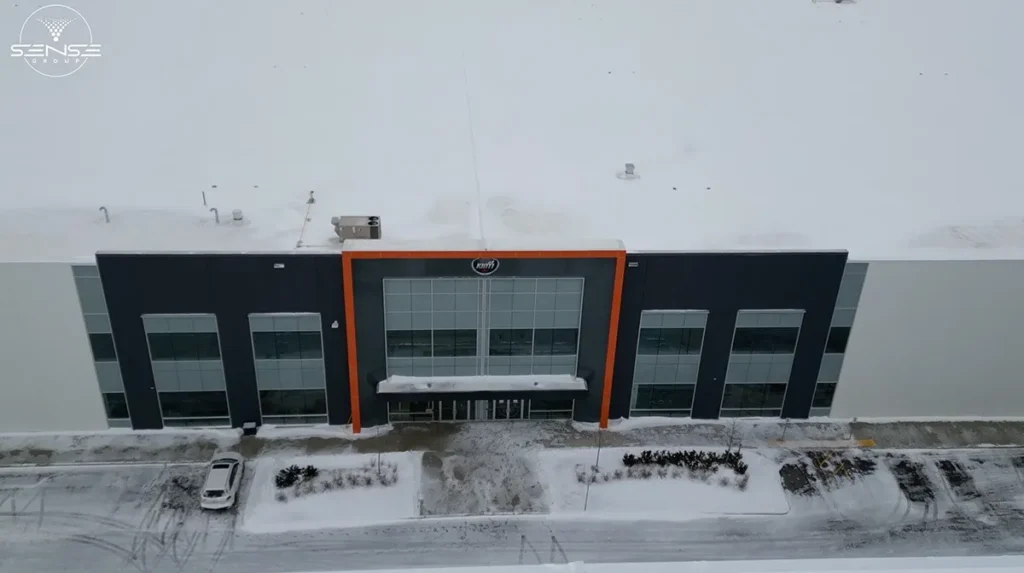
It was minus 25 degrees Celsius when we pulled into the parking lot of Kioti Canada’s manufacturing facility in Milton, Ontario. The kind of cold that bites through your jacket the moment you step outside. The kind of weather that tests equipment, exposes design flaws, and reveals the truth about any system that claims to be “industrial grade.”
We were not here to install anything new. We were here to revisit.
Eighteen months ago, Sense Group completed one of our most ambitious projects to date: a fully integrated security ecosystem for a 270,000-square-foot tractor manufacturing facility. 112 cameras. 24 access-controlled doors. Intercom stations at every major entry. An intrusion alarm network woven throughout the building. All of it connected by a fiber optic backbone designed to handle the massive data load without a single hiccup.
This article is the second chapter of that story. If you want to see how we originally designed and deployed the system, you can read the full case study here. But what we are doing today is different. Today, we are putting every component to the test. Not in a lab. Not on paper. In the real world, during one of the coldest weeks Ontario has seen this season.
Because that is the only way to know if a security system actually works.
Why We Came Back
In our industry, the handshake happens at commissioning. You finish the job, hand over the keys, and move on to the next project. But a good system should outlast that handshake by years, not months. And the only way to prove that is to return and see it for yourself.
We wanted to answer one simple question: Does it still work?
Not “does it turn on.” Not “does it look good.” Does it actually deliver the security, visibility, and control that KIOTI Tractor needed when they first called us?
The answer, after walking through every zone with the site manager, reviewing footage, checking network logs, and inspecting the hardware ourselves, was yes. Emphatically yes. But let me explain what that really means.
The Facility: A Quick Refresher
For those who have not read the original case study, here is the context.
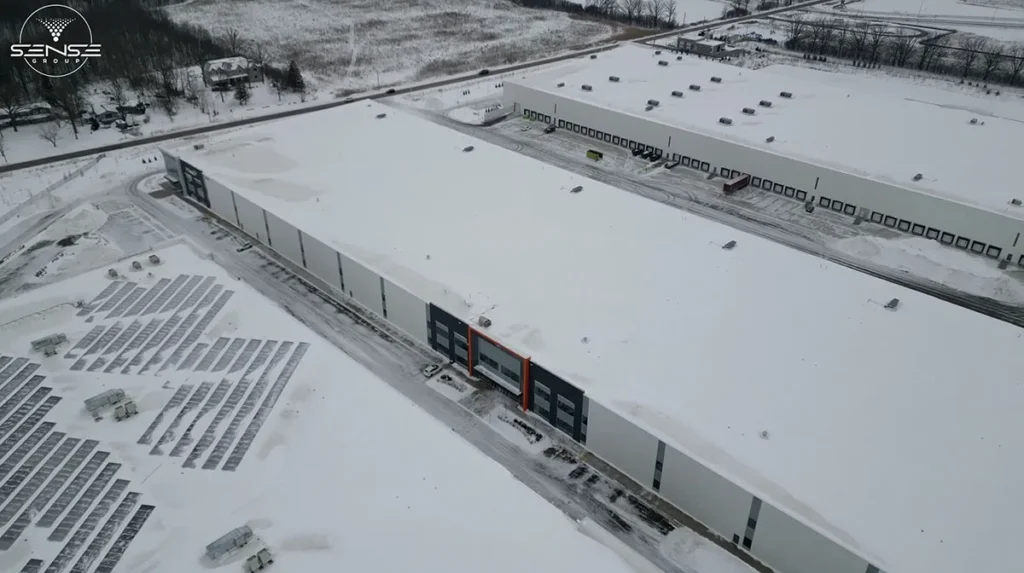
KIOTI Tractor operates a massive facility in Milton, Ontario. Think of a space the size of 40 basketball courts. Inside, they assemble and distribute tractors, store thousands of parts across towering shelving units, manage shipping and receiving from multiple loading docks, and run heavy crane operations daily.
This is not an office building. It is an active manufacturing environment with forklifts lifting loads ten meters into the air, trucks arriving at all hours, and employees moving between zones that carry very different risk levels.
When Kioti approached us, they had nothing. No cameras. No access control. No alarm system. No network infrastructure. It was a blank slate, which gave us the freedom to design everything from scratch. But it also meant we had to get it right the first time.
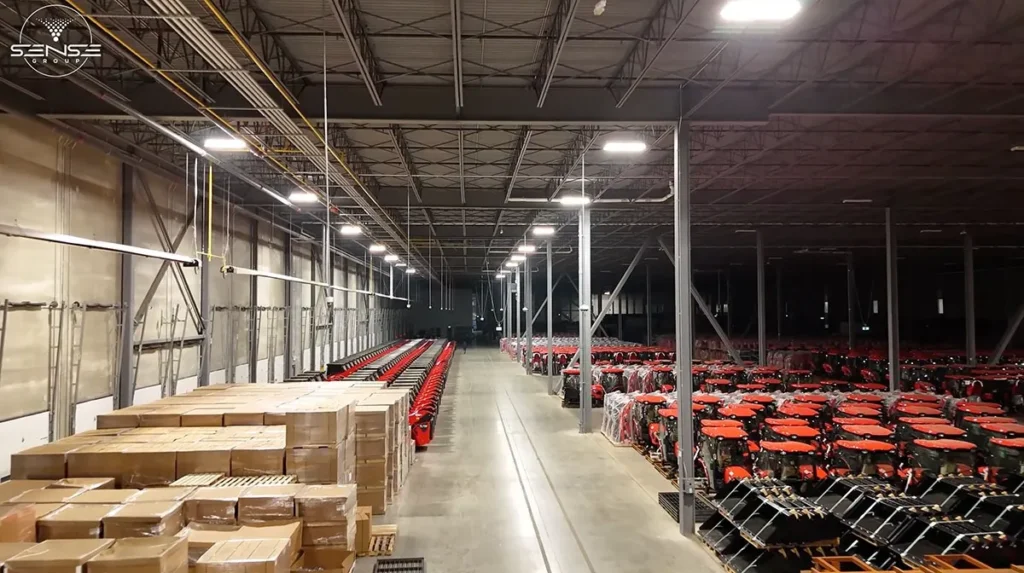
We divided the facility into five distinct security zones:
- Offices: administrative areas with sensitive data
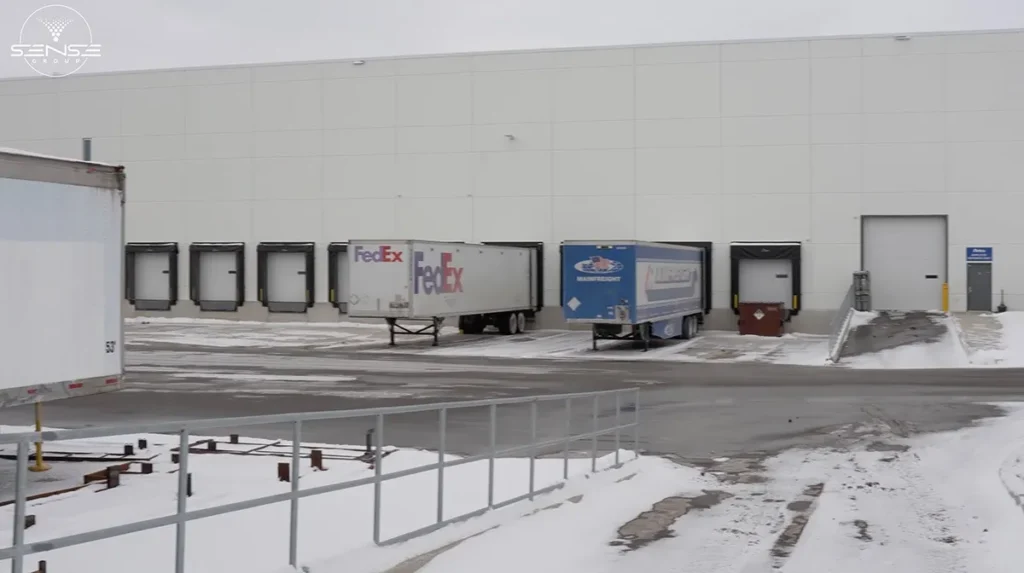
- Entrances and Loading Docks: high-traffic points vulnerable to unauthorized access
- Production Floor: heavy machinery, cranes, and assembly lines
- Warehouse Storage Aisles: high-value small parts with lot tracking requirements
- Perimeter: exterior boundaries, gates, and driveways
Each zone had its own challenges. Each one needed a different approach. And after 18 months, each one has proven its design.
The Outdoor Test: ColorHunter Cameras at Minus 25
Let me start with the coldest part of the facility: the perimeter.
When you design outdoor security for Ontario, you are designing for two climates. Summer can hit 35 degrees. Winter drops to minus 25 or colder. If your cameras cannot handle both extremes, they will fail. And they will fail at the worst possible moment.
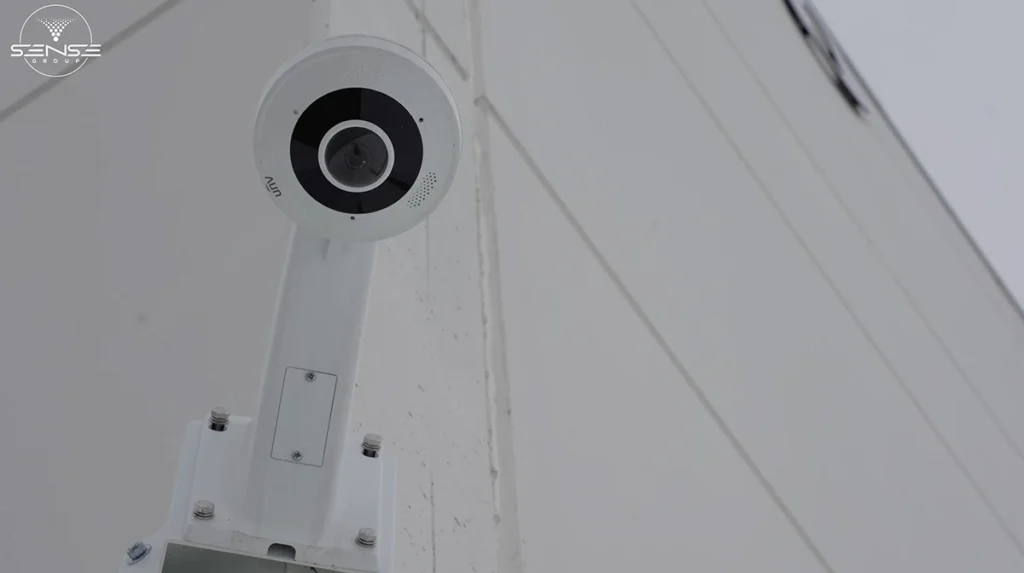
For the Kioti perimeter, we installed Uniview ColorHunter Turret Cameras. These units are built for exactly this scenario. They provide full-color video around the clock, even at night, using advanced sensor technology that pulls in more light than traditional infrared cameras.
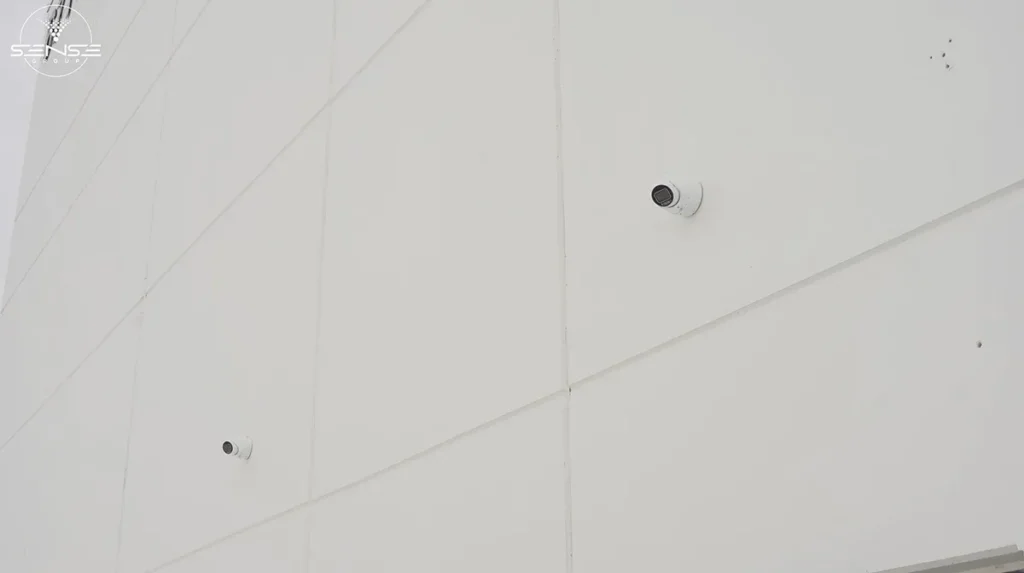
On the day we visited, the temperature had not climbed above minus 20 all week. Snow covered the parking lot. Ice coated the gates. And when we pulled up the live feed from the perimeter cameras, the image was as sharp and colorful as the day we installed them.
No fog on the lens. No color distortion. No dropped frames. The trucks entering the yard were clearly visible. License plates were readable. Even the breath coming from a worker’s mouth near the loading dock was captured in detail.
This is what we mean by “proven by time.” A camera can look great during commissioning. The real question is whether it still performs after a year of rain, snow, heat, and UV exposure. These cameras answered that question.
If you are planning an outdoor system for your property, we have written a detailed guide on how to design outdoor security systems that last. The principles we applied at Kioti are the same ones we recommend for any commercial or industrial site in the GTA.
Project at a Glance
| Field | Details |
| Client | KIOTI Tractor (Tractor Manufacturing & Distribution) |
| Location | Milton, Ontario |
| Facility Size | 270,000 sq ft (equivalent to 40 basketball courts) |
| Vertical | Industrial / Manufacturing |
| Scope | Video Surveillance, Access Control, Intrusion Alarm, Intercom |
| Cameras Installed | 112 Uniview units generating 188 video streams |
| Access Points | 24 Controlled Doors (ICT Protege WX) |
| Alarm System | DSC detectors integrated with ICT |
| Intercom | BAS-IP AT-07L monitors and AV-04SD panels |
| Storage | 200TB NVR (20 x 10TB Drives in RAID 5/6) |
| Network | Fiber optic backbone with 3x 48-port PoE switches |
| Project Timeline | Completed in 30 days by a 6-person crew |
| Review Period | 18 months post-installation |
Highlights: What 18 Months Have Confirmed
- Zero Core Infrastructure Service Calls. The NVR, switches, and fiber backbone have operated continuously without a single failure or maintenance request.
- 188 Video Streams from 112 Cameras. By using multi-sensor and dual-lens camera technology, we achieved nearly double the coverage with fewer physical units. This reduced cabling, installation time, and long-term maintenance costs.
- Full Audio and Video at Critical Handover Points. The loading docks and packaging areas capture both what happened and what was said. This capability was specifically requested by the client for shipment verification.
- Stable Performance in Extreme Cold. All exterior cameras, sensors, and intercom panels have operated without degradation through two Ontario winters.
- Zone-Based Access Control Active. The ICT Protege WX system logs every entry and exit. Production areas remain accessible only to authorized personnel.
- Forklift-Safe Design Confirmed. Not a single camera, switch, or cable run has been damaged by equipment movement. The placement planning paid off.
Walking Through the Facility, Zone by Zone
How Every Decision We Made Still Holds Up Today
The best way to understand a system of this scale is to walk through it the same way we did during our return visit. From the main entrance to the server room, every zone tells its own story. And every story has a happy ending.
Let me take you inside.
Main Entrance: Where the First Impression Happens
The front doors of any facility set the tone. For visitors, it is their first experience of the company. For security, it is the first line of defense.
At Kioti, we installed two parallel systems that work together seamlessly.
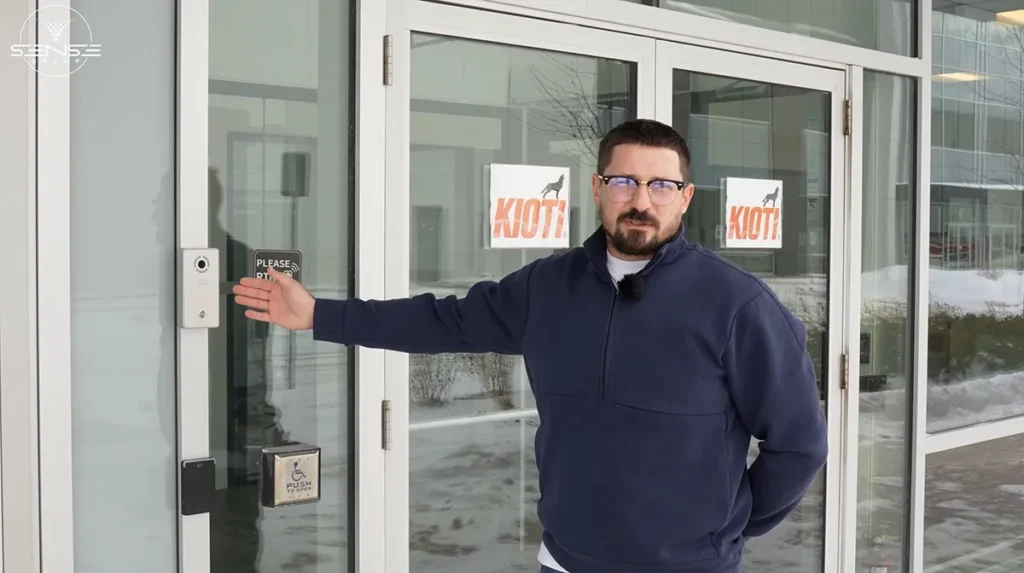
For visitors: A BAS-IP AV-04SD entrance panel greets anyone who approaches. This is not a basic doorbell. It is a 2-megapixel IP camera with a 100-degree viewing angle, built to withstand vandalism (IK09 rating) and weather (IP65 protection). When a visitor presses the call button, reception sees them instantly on a 7-inch touchscreen monitor inside.
For employees: An ICT TSEC Extra Combo reader handles daily access. Every fob is registered to a specific person. Every tap is logged with a timestamp. This creates a complete audit trail that the facility manager can review at any time.
On our visit, we stood outside for several minutes in minus 20 weather while filming. The intercom panel responded instantly. The camera feed was sharp. No delay, no lag, no frozen screens. Two Canadian winters, and the system performs as if it were installed yesterday.
If you are thinking about upgrading your own entry points, we have written a guide on how modern entry doors work with video intercom systems. The BAS-IP setup at Kioti follows the same principles we recommend for commercial properties across Ontario.
Mail Delivery Zone: Small Space, Big Design
Just inside the entrance is a feature that most visitors never think about, but employees use every day: the safe delivery zone.
This is a controlled buffer area where couriers can drop off packages without entering the main office. It sounds simple, but getting it right requires careful planning.
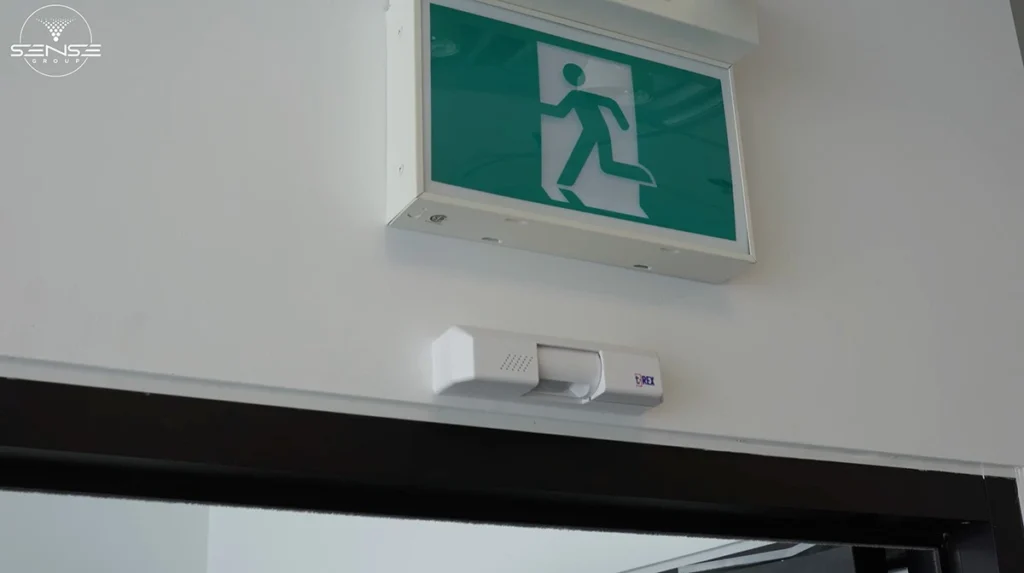
Here is what we installed:
- An ICT reader paired with an automatic door opener (ADO). Tap your fob, and the door swings open. No hands needed.
- A T-Rex exit sensor. When someone walks toward the door from inside, it unlocks automatically. This keeps the exit path clear as required by Ontario fire code.
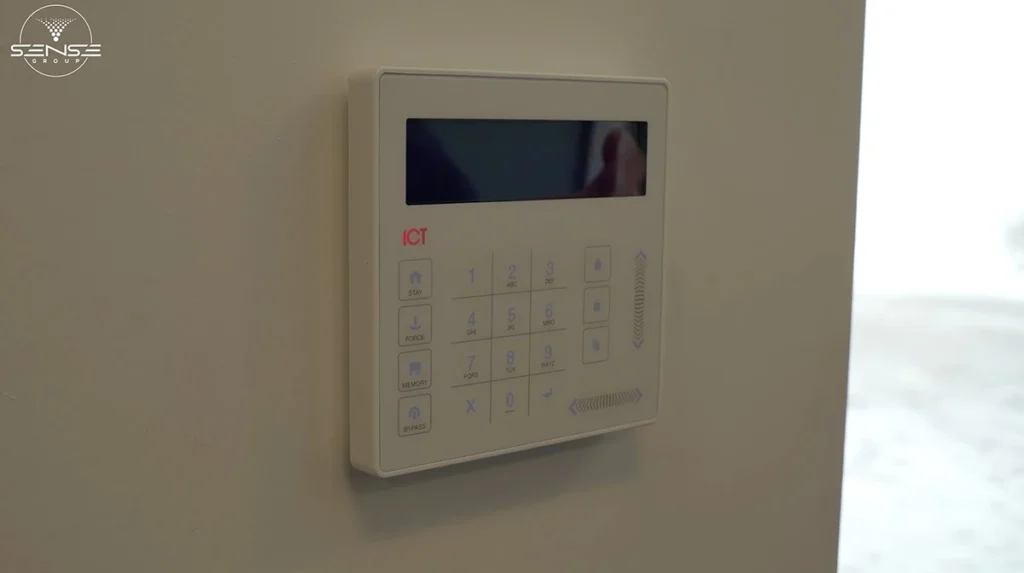
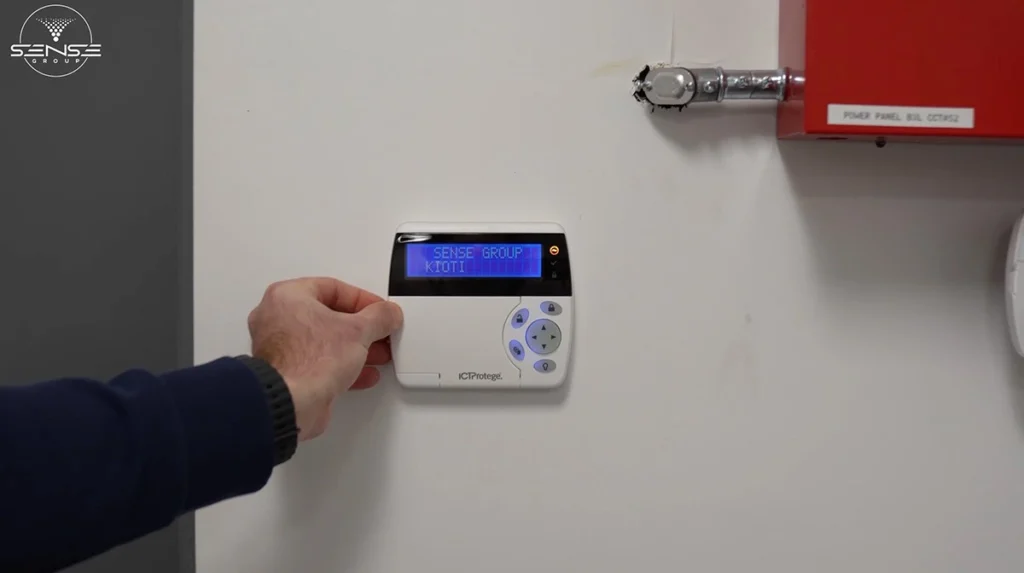
- An ICT keypad for arming and disarming the alarm. Every code is tied to a specific individual, so the facility knows exactly who changed the system status and when.
- Motion sensors and glass break detectors to catch unauthorized movement or forced entry attempts.
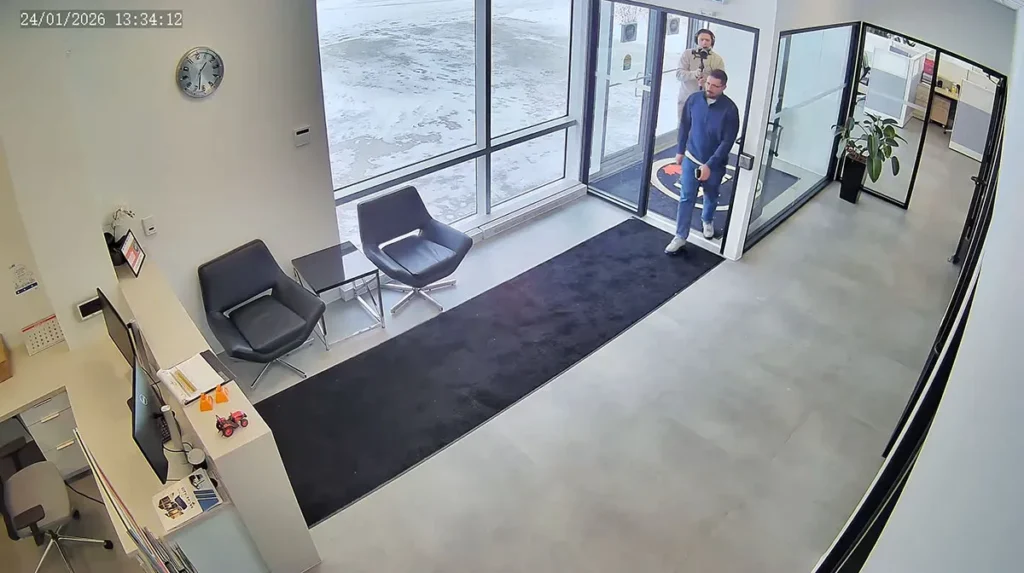
Every component in this zone still works exactly as designed. The automatic door opener has handled thousands of cycles without failure. The T-Rex sensor responds instantly. The keypad has never needed recalibration.
This is what good design looks like: invisible when it works, invaluable when you need it.
Reception and Lobby: The Communication Hub
Every visitor, truck driver, and subcontractor funnels through reception. This is where communication happens, and where the security system needs to be both powerful and unobtrusive.
We installed a BAS-IP AT-07L touchscreen monitor at the reception desk. This 7-inch display connects to both intercom panels (main entrance and loading dock), supports up to 32 IP cameras in quad-view mode, and stores call history and visitor photos in internal memory.
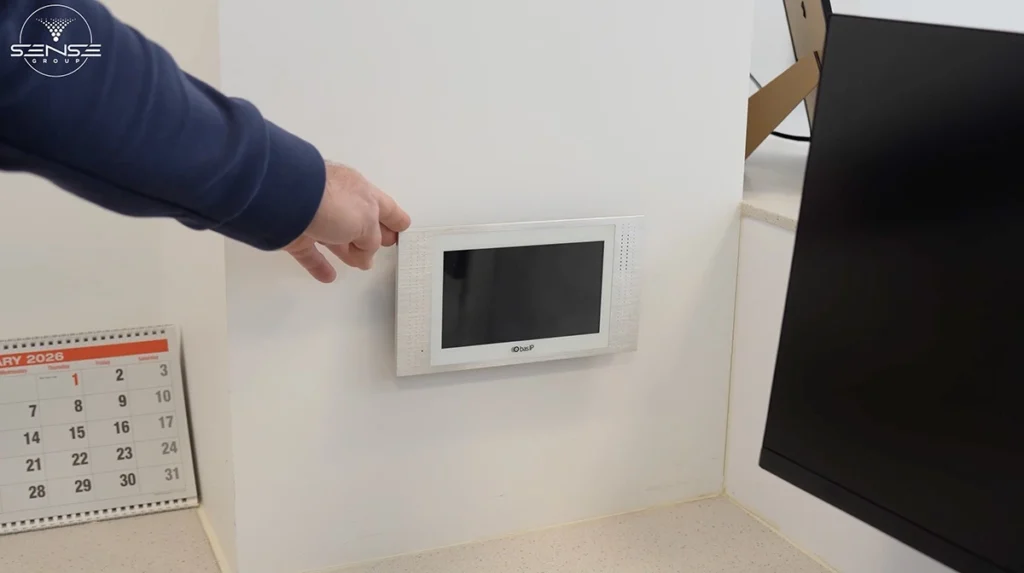
When a truck arrives at the loading bay, the driver presses the intercom. Reception sees them immediately, verifies the delivery, and can grant access without leaving the desk. This streamlines operations and eliminates the guesswork that comes with voice-only systems.
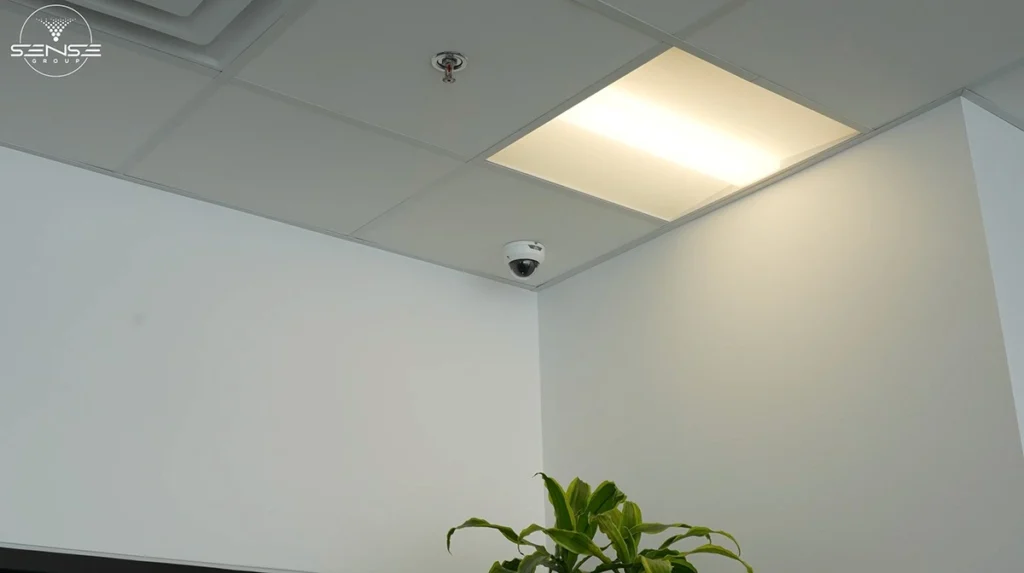
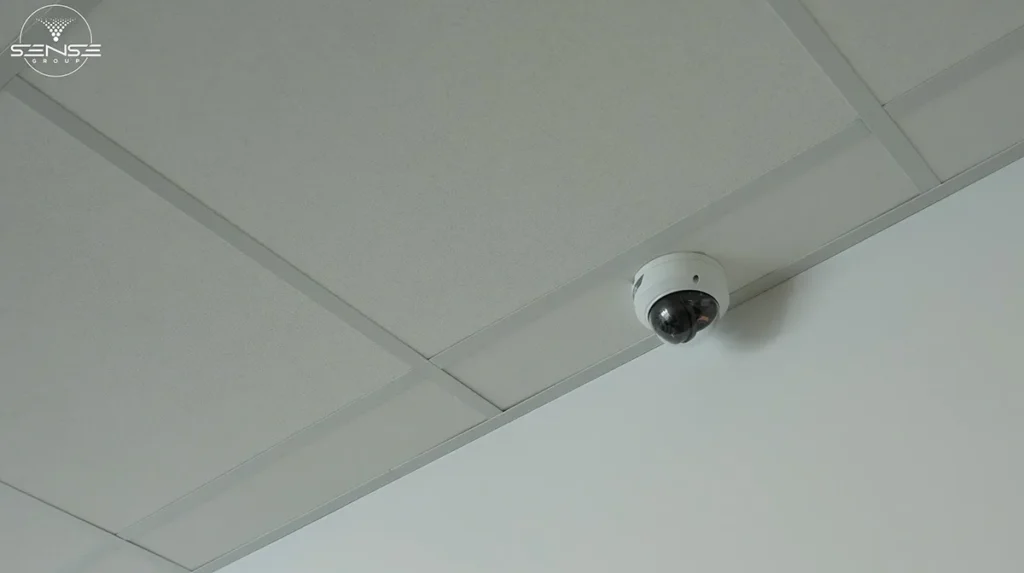
The lobby itself has multiple Uniview 5MP dome cameras positioned to capture every angle without creating blind spots. This footage serves as the master reference for the entire facility’s access timeline.
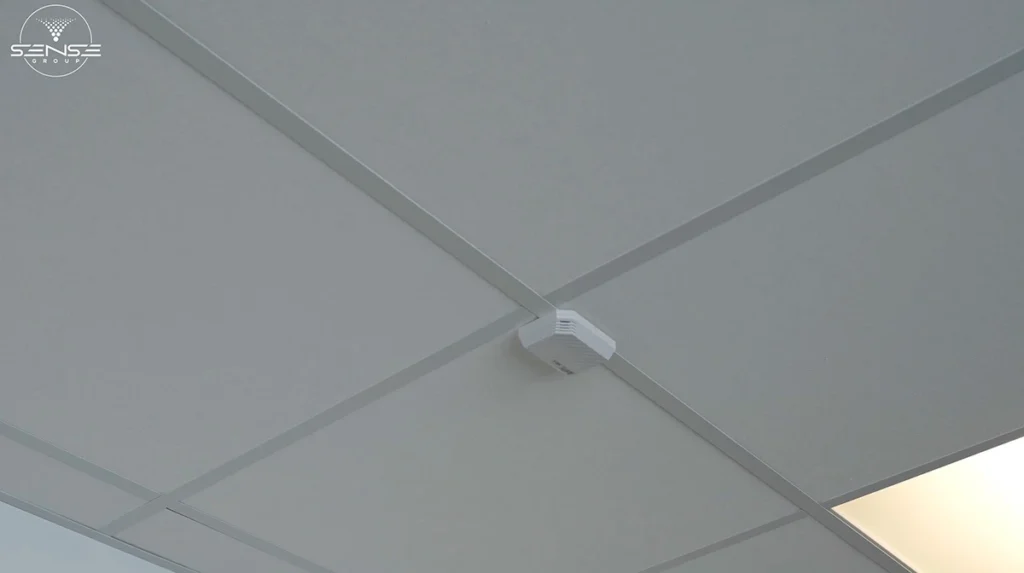
Every room in this area has large windows, which presented a specific challenge. Glass is beautiful, but it is also vulnerable. We addressed this with DSC Acuity glass break detectors (AC-102C) installed at key points. These sensors can distinguish between a window being struck and normal environmental sounds, reducing false alarms while ensuring real threats trigger an immediate response.
If your property has large glass areas, whether storefronts, lobbies, or floor-to-ceiling windows, we have written a detailed article on how to secure spaces with extensive glazing. The approach we used at Kioti applies directly to retail, office, and residential environments across the GTA.
Office Areas: Security Without Disruption
Once past reception, the office wing feels like any modern workplace. Open desks, natural light, people focused on their tasks. The security here is deliberately subtle.
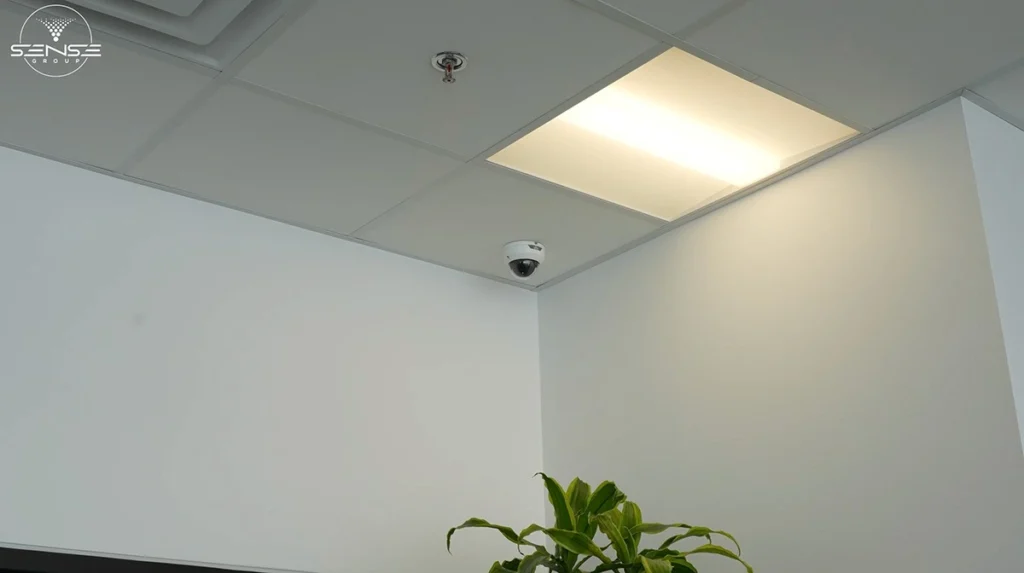
We installed:
- Uniview 5MP dome cameras in opposite corners to eliminate blind spots. These compact units blend with the ceiling and capture high-resolution footage without drawing attention.
- DSC LC-203 dual-technology PIR motion detectors facing the entrances. These sensors combine passive infrared and microwave detection to reduce false alarms while catching real movement after hours.
- Glass break sensors along the window lines.
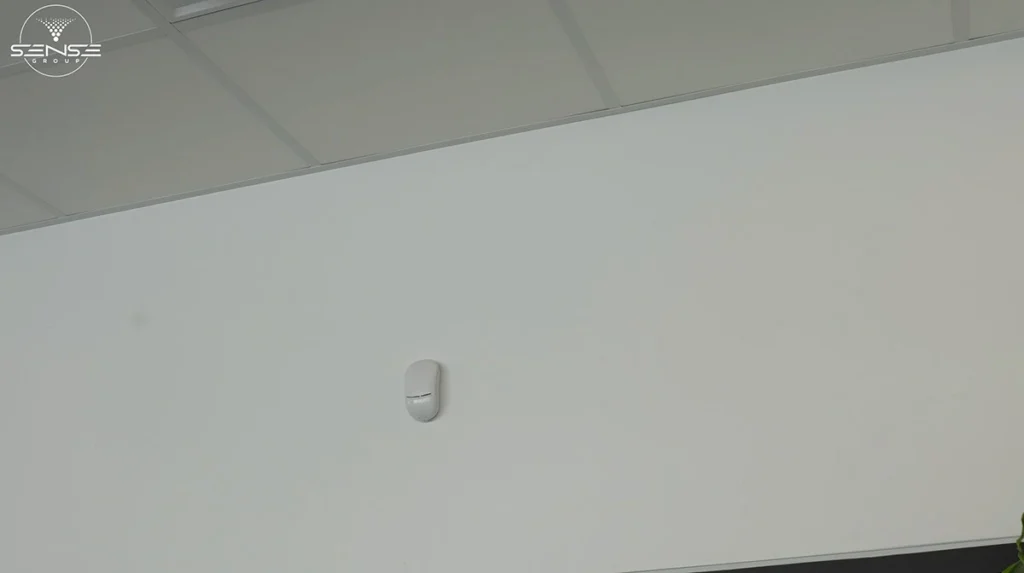
This part of the facility is not high-risk, but people work here every day. The priority is reliable monitoring that does not interfere with productivity.
To this day, the cameras capture crisp footage. The motion detectors have never triggered a false alarm. The glass break sensors sit quietly on the walls, ready if needed.
The Boundary: Where Office Ends and Production Begins
This is the most important door in the entire facility.
On one side: administrative offices, meeting rooms, visitors. On the other side: heavy machinery, crane operations, forklifts moving multi-ton loads. The stakes here are not just about security. They are about safety.
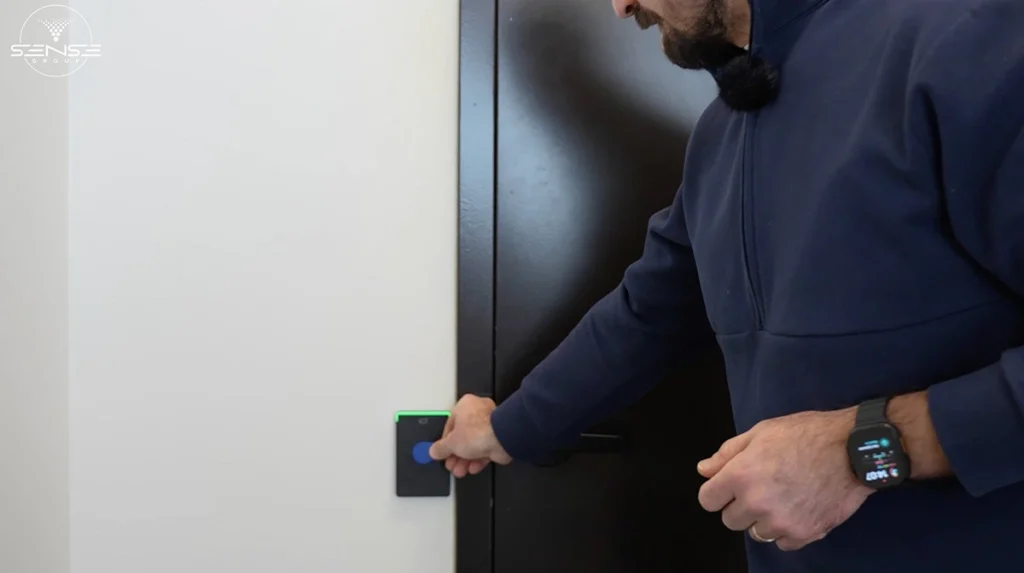
The ICT Protege WX system makes this boundary enforceable. Every employee fob is programmed with specific zone permissions. Production staff can pass through this door. Office staff cannot. Visitors never cross without an escort.
We tested this during our visit. An office-only fob was rejected immediately. A production fob opened the door without hesitation. The access log recorded both attempts with timestamps.
This is zone-based access control in action. It is not about keeping people out. It is about keeping people safe.
Production Floor: Where Scale Meets Precision
Step through that door, and the scale hits you immediately.
The production hall stretches as far as you can see. Ceilings tower overhead. Cranes move heavy components. Forklifts lift loads higher than most people realize. This is not a space where standard cameras work.
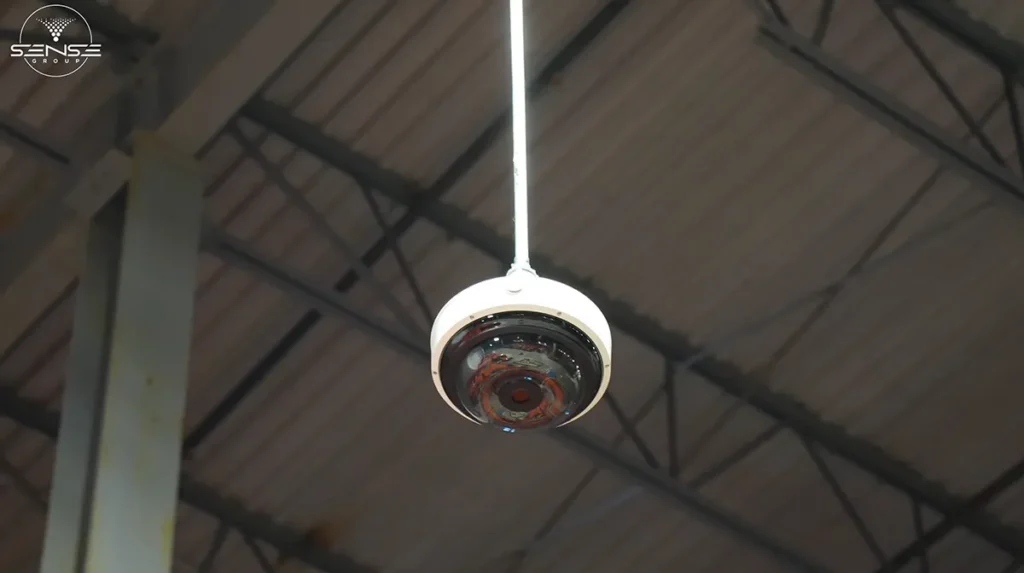
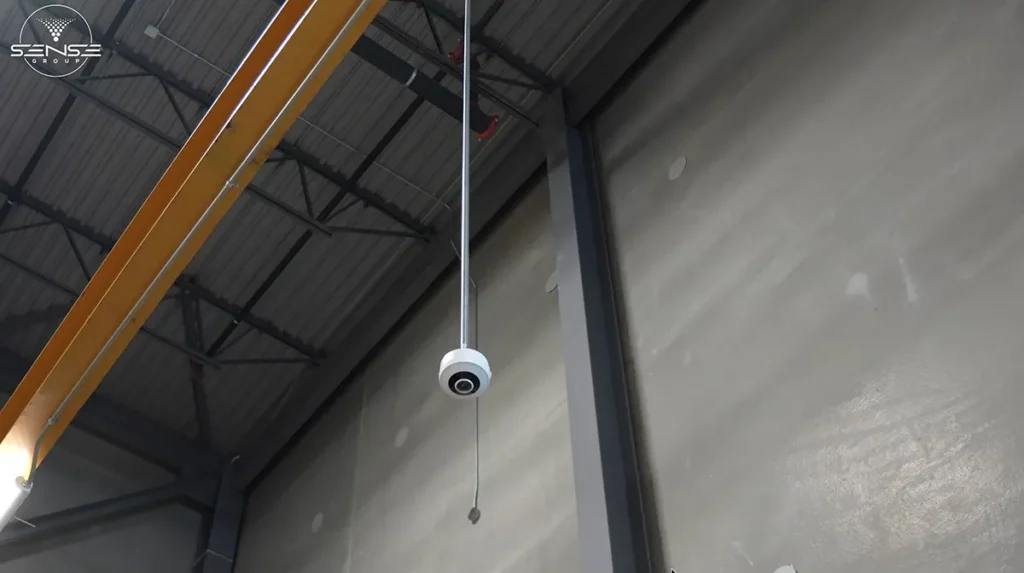
For this zone, we deployed 25 Uniview multi-sensor cameras (IPC8645EA-ADZKM-I1). Each unit houses four 5MP lenses, providing complete 360-degree coverage from a single installation point. We mounted them at heights up to 40 feet, safely above the operational envelope of the largest equipment.
Here is why this matters: a single multi-sensor camera replaces four traditional units. That means fewer cables, fewer mounting points, less infrastructure to maintain. And because each camera weighs around 5 kilograms, we installed fall protection cables on every unit. If a mount ever fails, the safety cable prevents the camera from falling onto workers or equipment below.
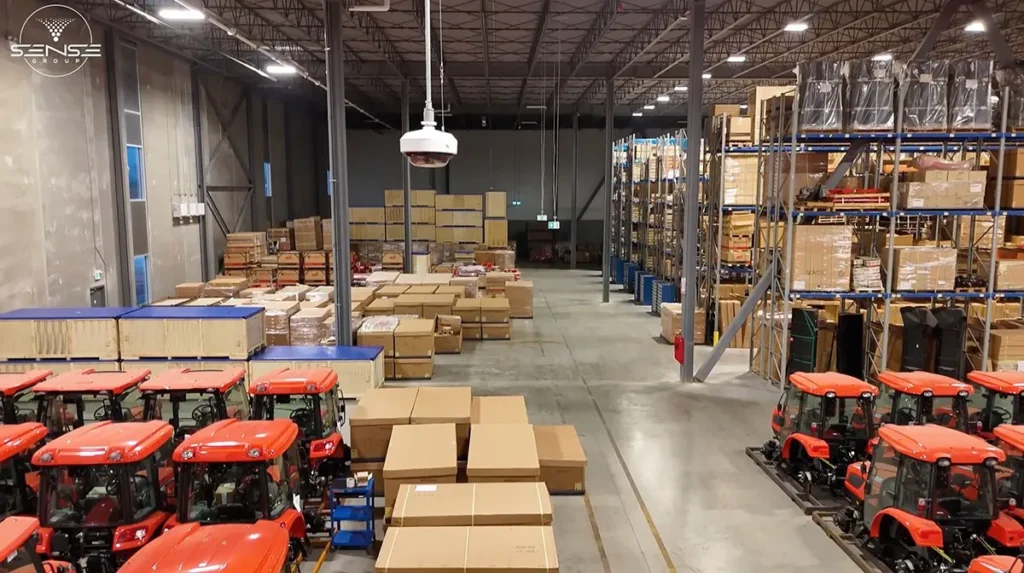
On our visit, we reviewed footage from these cameras. The clarity was remarkable. You could see individual parts on the assembly line, read labels on boxes, and identify workers by their movements. Even in the areas with fluctuating light levels, the image quality remained consistent.
This is the zone where “proven by time” means the most. Heavy industry is hard on equipment. Vibration, dust, temperature swings, and constant activity. After a year and a half of this punishment, every multi-sensor camera is still operational. Not a single unit has failed.
Warehouse Aisles: The Lot Number Problem
This area looks simple: tall shelving units, narrow aisles, small parts in labeled boxes. But it is one of the most sensitive zones in the entire facility.
Every component stored here has a lot number. Kioti needs to trace exactly who accessed what, and when. If a part is missing or a shipment is disputed, the footage must show the answer clearly.
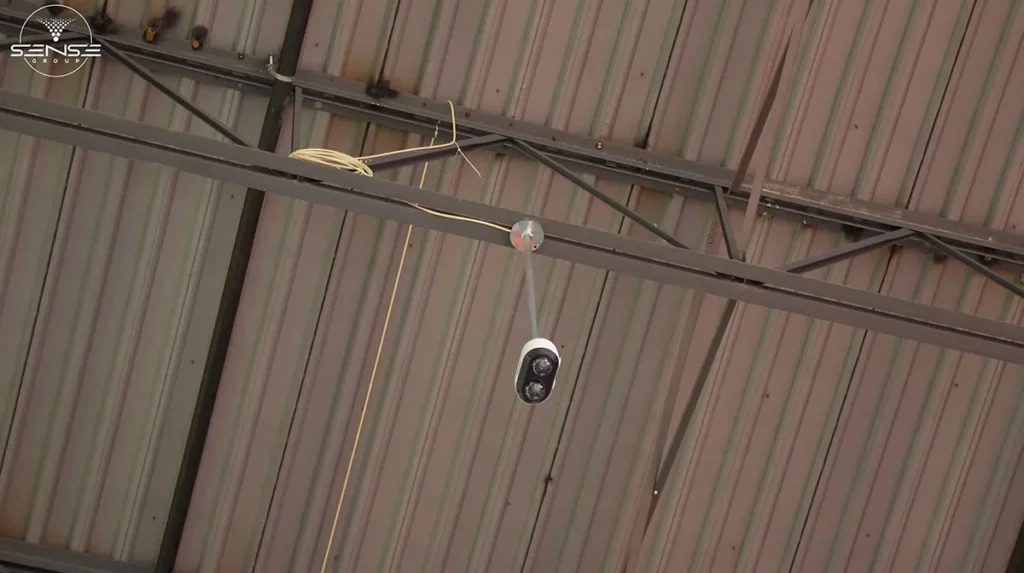
The challenge is that forklifts constantly move up and down these aisles, lifting pallets high into the racks. Cameras placed at the wrong height would be destroyed within weeks.
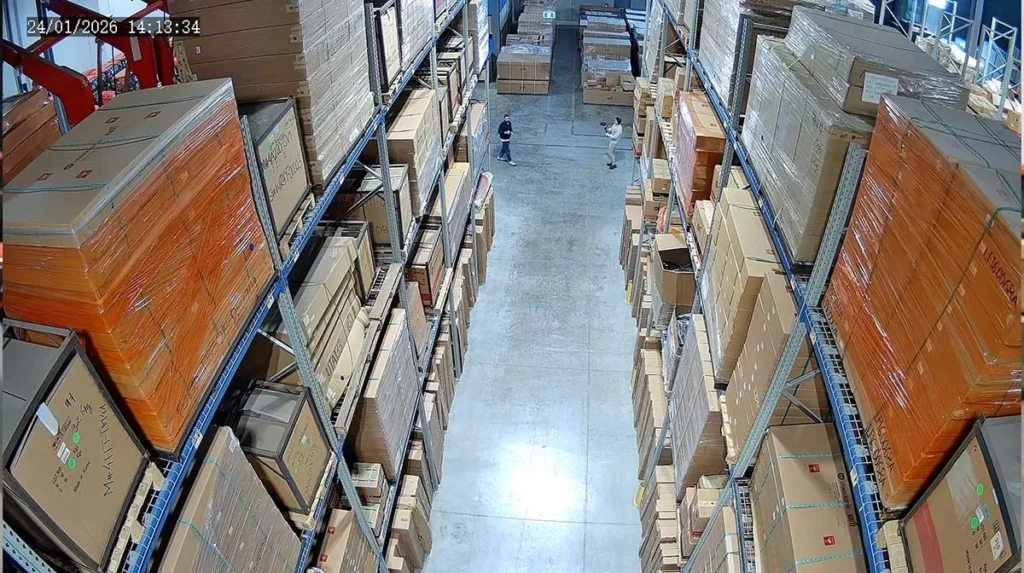
Our solution: Uniview dual-sensor 180-degree cameras mounted between aisles at a height safely above the lift zone. Each unit has two lenses facing opposite directions, covering the entire length of adjacent aisles from a single point.
The coverage is close-range and high-quality. When we reviewed the footage during our visit, we could clearly see which boxes were handled, by whom, and at what time. The facility manager told us this capability has already proven valuable when reconciling inventory discrepancies.
Loading Docks: Where Audio Changes Everything
The loading docks are the busiest and most critical zone for accountability. This is where suppliers hand off materials, where Kioti receives shipments, and where documentation is exchanged face-to-face.
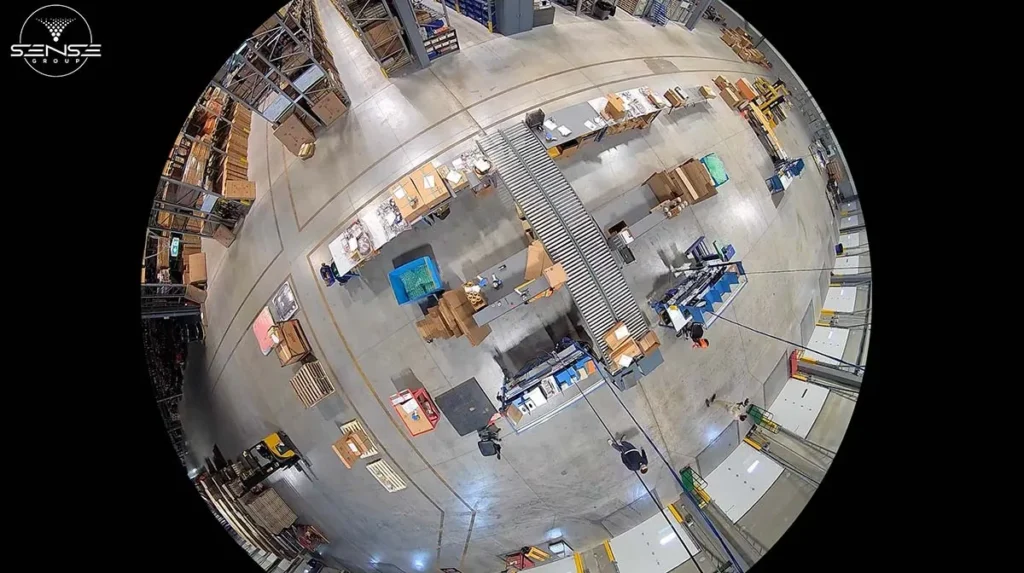
Video alone is not enough here. If there is ever a dispute about what was said during a handover, about missing parts or damaged goods or unclear instructions, the client needs to hear what happened, not just see it.
For this zone, we installed 4 Uniview fisheye cameras (IPC86CEB-AF18KC-I0) with built-in microphones. These 12MP units provide 360-degree panoramic views and capture clear audio even in noisy industrial environments.
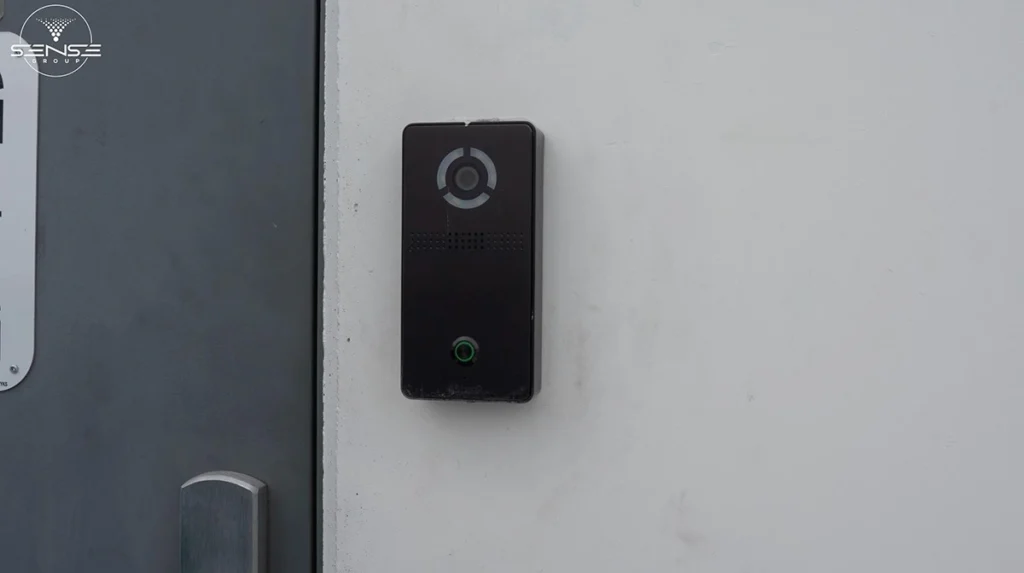
We also placed a second BAS-IP intercom panel at the loading dock entrance. It is black, at the client’s request, to visually distinguish it from the white panel at the main entrance. Truck drivers press the call button, reception sees them on the monitor, and access can be granted without anyone walking across the facility.
The audio recording capability has already proven its value. During our visit, the site manager mentioned that recordings from the loading dock had helped resolve a supplier dispute earlier in the year. The footage showed exactly what was delivered, what condition it was in, and what was discussed during the handover.
This is why we design systems, not just install cameras.
Network Infrastructure: The Invisible Backbone
Everything I have described so far depends on one thing: a network that can handle the load.
112 cameras generating 188 video streams. 24 access-controlled doors logging every entry. Alarm sensors monitor dozens of zones. Intercom panels transmitting real-time video and audio. All of this data flows through the network continuously, 24 hours a day.
The facility is 270,000 square feet. The distance from the server room to the farthest cameras exceeds 100 meters. Standard copper Ethernet (Cat6) becomes unreliable at those distances. We could not risk dropped frames or signal degradation in a facility of this importance.
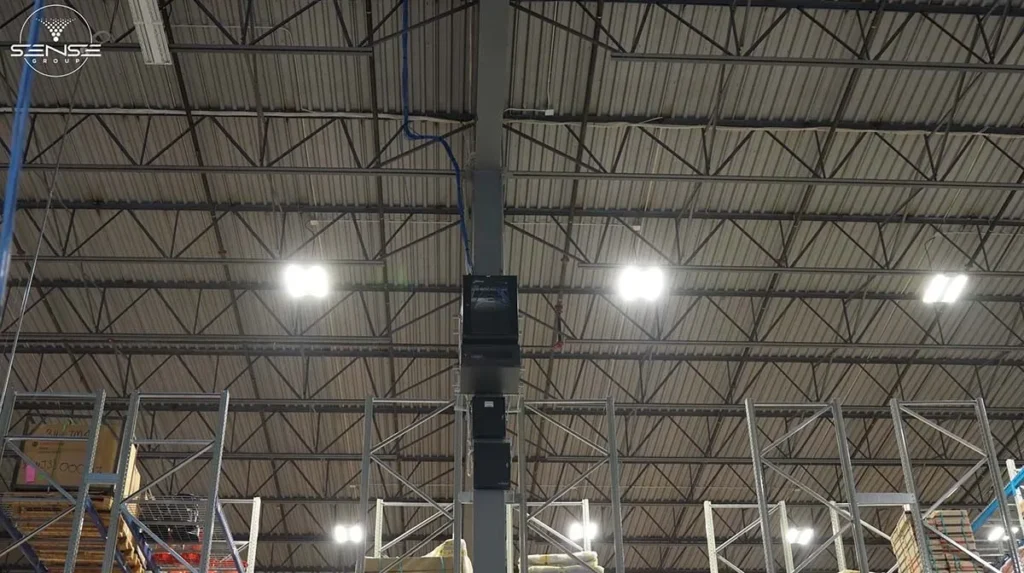
Our solution: fiber optic backbone connecting the central NVR to three 48-port PoE switches distributed across the production floor.
Here is how it works:
- The 256-channel Uniview NVR sits in the server room, processing all 188 video streams without delay.
- Three dedicated fiber optic lines run from the NVR to the switches, eliminating bandwidth bottlenecks and ensuring maximum speed.
- Each switch handles a section of the facility, balancing the load and providing room for future expansion.
- All PoE switches are mounted on steel posts at heights safely above forklift operations, and we can manage every port remotely.
During our visit, we checked the network logs. Since commissioning, there had been zero fiber failures, zero switch outages, and zero video dropouts. The system handles the full load every day without breaking a sweat.
The Server Room: The Brain of the System
This is the only room in the facility where every system converges. Access is restricted to authorized IT personnel only and controlled by the ICT system.
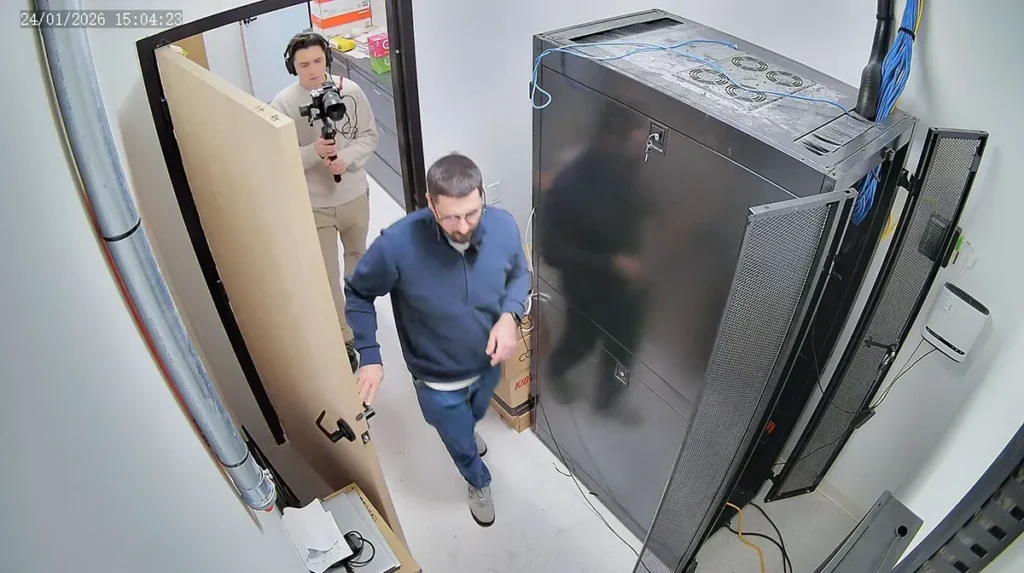
Inside:
- Controllers for all 24 access-controlled doors, with power supplies and backup batteries.
- The ICT Protege WX controller manages not only access control but also integrated alarm functions. DSC motion detectors and glass break sensors feed directly into this system, eliminating the need for a separate alarm panel.
- Monitoring equipment for reviewing system status and managing user permissions.
- A dedicated display for security staff to quickly review camera footage.
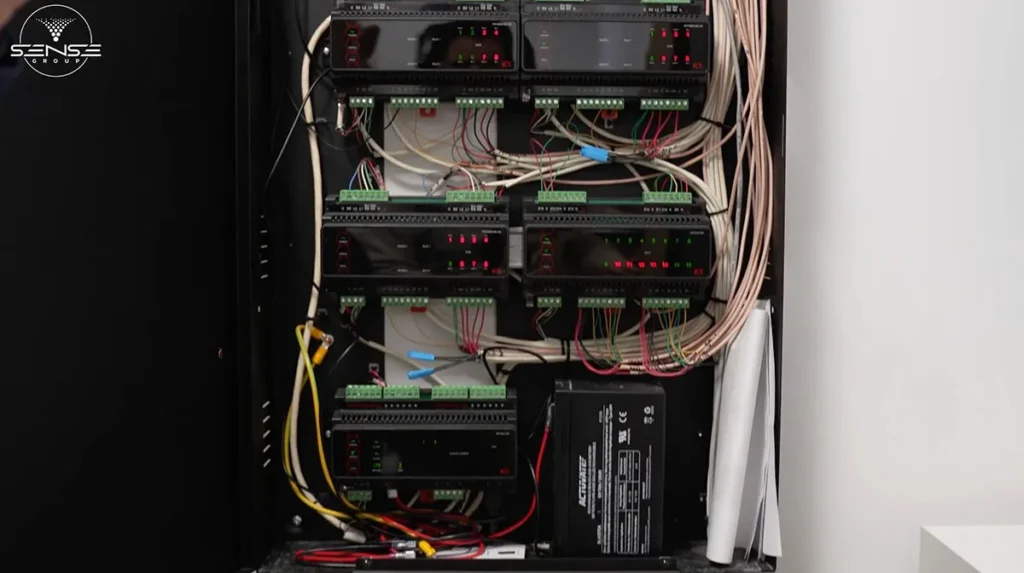
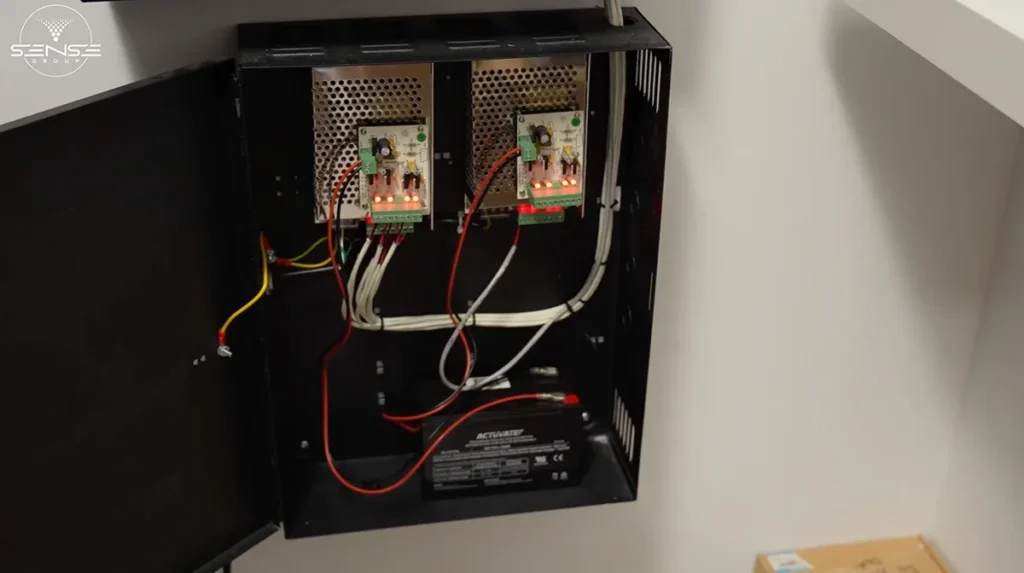
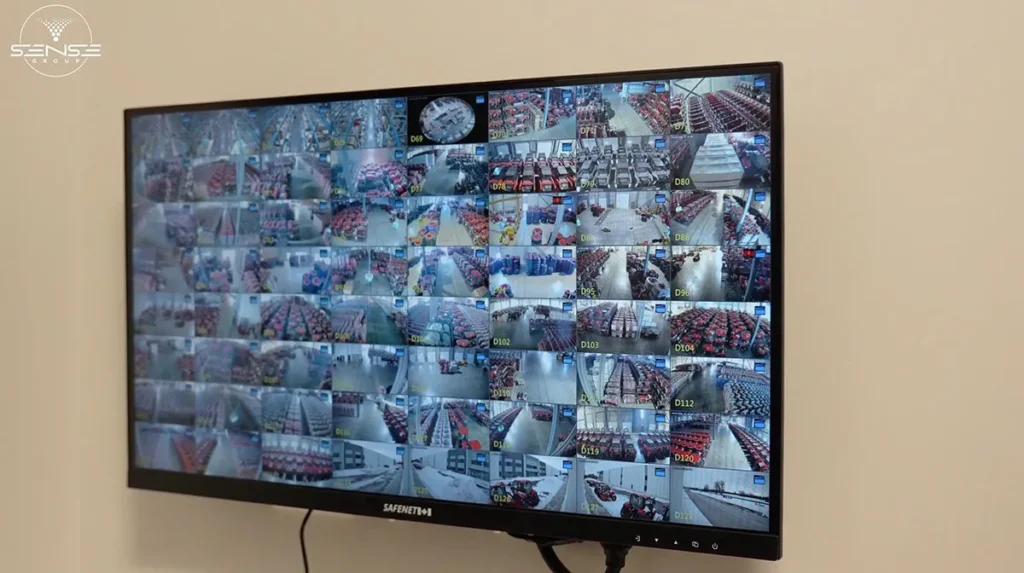
And at the heart of everything: the Uniview NVR with 200TB of storage.
This unit contains 20 hard drives, each 10TB, configured in RAID 5 and RAID 6 arrays. If one drive fails, the system continues operating and footage is preserved. If two drives fail simultaneously, the redundant configuration still protects the archive.
We opened the unit during our visit. All 20 drives were healthy. The storage logs showed continuous operation since day one. The RAID array had never needed to activate its failover protection, because nothing had failed.
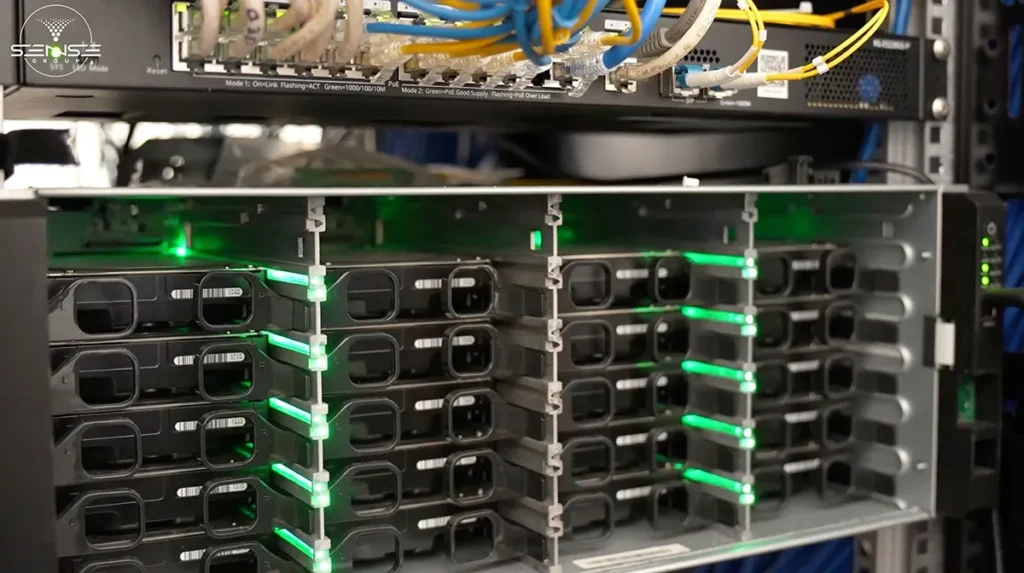
For a manufacturing facility, this level of redundancy is not optional. Losing video during a critical event, whether a workplace incident, a theft, or a supplier dispute, is simply not acceptable. The system must work, always.
And to this day, it does.
Lessons Learned, Results & Next Steps
What This Project Taught Us
Every installation teaches something. But a project of this scale, revisited after a year and a half in operation, reveals what truly matters versus what only looks good on paper.
Here is what the Kioti facility confirmed.
Lessons Learned
1. Integration Is Not a Feature. It Is the Foundation.
We made a decision early that added complexity to installation but simplified everything after: all security functions run through a unified platform.
The ICT Protege WX system does not just control doors. It receives signals from DSC motion detectors and glass break sensors. When an alarm triggers, the access control system knows. When a door is forced, the event is logged alongside every fob tap and entry attempt.
One place to look, not four. One system to learn. One vendor to call.
After living with this design for over a year, the Kioti team confirmed what we suspected: simplicity at the management level is worth complexity at the installation level.
2. Overbuilding the Network Pays for Itself
We could have installed a simpler network. Copper cabling with a few switches would have technically worked. It would have cost less upfront.
But “technically works” is not the standard for a facility that runs 24/7 and stores footage needed for disputes, insurance claims, or workplace investigations.
The fiber optic backbone has never dropped a frame. The three 48-port PoE switches have never overloaded. The NVR processes 188 simultaneous streams without lag.
When we checked the logs during our visit, zero recorded failures since commissioning. Not one.
The lesson: the network is not where you cut costs. It is where you invest to protect everything else.
3. Physical Placement Decisions Last Forever
Cameras can be upgraded. Software can be updated. But once a cable is run and a mount is welded to a steel beam 40 feet up, that decision is permanent.
We spent significant time mapping forklift paths, crane swing radiuses, and traffic patterns. Every camera, switch, and cable run was positioned to stay clear of equipment movement.
The result: not a single piece of hardware has been damaged by facility operations. No knocked-over cameras. No severed cables. No emergency calls because a forklift backed into a switch.
This is invisible work. The client never sees the hours spent analyzing floor plans. But they feel the result every day, in the form of a system that simply works.
4. Audio Recording Is Underrated
Before this project, audio would not have ranked near the top of our priority list. Video, access control, and alarms feel essential. Audio feels optional.
Kioti changed our thinking.
The fisheye cameras with built-in microphones at the loading docks have already proven their value. A supplier dispute was resolved entirely because the system captured not just what was delivered, but what was said during the handover.
For any facility where handovers, inspections, or verbal agreements happen, audio is not optional. It is evidence.
Results: Measurable Outcomes
Operational Reliability
| Metric | Outcome |
| Core infrastructure failures | Zero |
| Camera operational rate | 100% (112 units) |
| Access point functionality | 100% (24 doors) |
| Network uptime | 100% |
| Service calls for core systems | Zero |
Coverage and Visibility
| Capability | Details |
| Total video streams | 188 from 112 cameras |
| Perimeter coverage | Full-color 24/7 |
| Production floor | 360° multi-sensor coverage |
| Loading docks | Audio + video capture |
Durability
| Condition | Result |
| Temperature extremes | Stable at −25°C and +35°C |
| Equipment proximity | Zero damage from forklifts/cranes |
| Weather exposure | No exterior failures |
Who This Applies To
This case study is for a specific reader.
Industry
Manufacturing, warehousing, distribution, logistics, industrial production. Any facility combining office space with heavy operations.
Facility Profile
50,000+ square feet. Multiple security zones. Heavy equipment. Loading docks with regular deliveries. Mixed workforce: office staff, production workers, visitors, contractors.
Pain Points You May Recognize
- Cameras exist, but footage is useless when needed
- Access control and alarms do not communicate
- No way to prove what happened during handovers
- Equipment keeps damaging security hardware
- Half the cameras are offline and nobody noticed
If this sounds familiar, the approach we used at Kioti applies directly to your facility.
Partner Perspective
We documented this project in collaboration with Pipl Systems, a global media channel dedicated to security technology. Their team spent a full day on-site filming the facility to show exactly how these systems operate in a live industrial environment.
Here is what Oleg Bordiian, Founder of Pipl Systems, had to say about the project:
“With projects like this, what really matters to us is showing how modern security systems actually work in large production and warehouse facilities. Not in theory, but in real life. What technologies are being used today, how they are combined, and what level of protection and operational control they provide. At the same time, this is also a great way to highlight the quality of work and experience of the system integrator behind the project.”
(Read the full post here link: https://www.linkedin.com/posts/oleg-bordiian_weve-just-published-another-large-and-truly-activity-7427032965953765376-mCBa)
Final Thoughts
We do not write case studies to impress. We write them to show what happens when security is treated as a system, not a product list.
The Kioti facility works because every camera was placed with purpose, connected to infrastructure that handles the load, and integrated into a platform that makes footage actionable.
A year and a half later, the system performs exactly as designed. That is not luck. That is what happens when you plan for the long term.
Sense Group specializes in integrated security for commercial and industrial facilities across the Greater Toronto Area. We design, install, and service video surveillance, access control, intercom, and alarm systems. Our work focuses on solutions that scale with your business and perform under real-world conditions.
If you are planning a security project, whether 10 cameras or 200, we would be glad to talk.
Contact Sense Group
| Website | sense-group.pro |
| Phone | (647) 578-7511 |
| [email protected] | |
| Service Area | Greater Toronto Area |
We build security systems that work on day one and still work on day five hundred.
Frequently Asked Questions
How many cameras can a system like this support?
The NVR we deployed handles 256 channels. With 112 cameras generating 188 streams, there is room for expansion without replacing core hardware.
What happens to the door locks during a power outage?
Access-controlled doors are configured based on their function. Exterior doors remain locked to maintain security. Interior doors allow free egress as required by fire code. The ICT system with backup power keeps access control operational during outages.
Can the system be expanded later?
Yes. The fiber backbone and switch infrastructure were sized for growth. Adding cameras, doors, or sensors does not require replacing the core network.
Do you service facilities outside the Greater Toronto Area?
Sense Group primarily serves the GTA, including Toronto, Mississauga, Brampton, Milton, Vaughan, and surrounding areas. For larger projects outside this region, we evaluate on a case-by-case basis.
Is there a monthly fee for the system?
The hardware we install does not require cloud subscriptions or monthly licensing fees. The client owns the system outright. Optional monitoring services are available separately.
How long does installation take for a facility this size?
The Kioti project was completed in 30 days by a six-person crew. Timeline depends on facility complexity, existing infrastructure, and scope.
Can the access control system integrate with our existing alarm system?
In most cases, yes. At Kioti, DSC sensors integrate directly with ICT access control. We design systems where components communicate, not operate in silos.