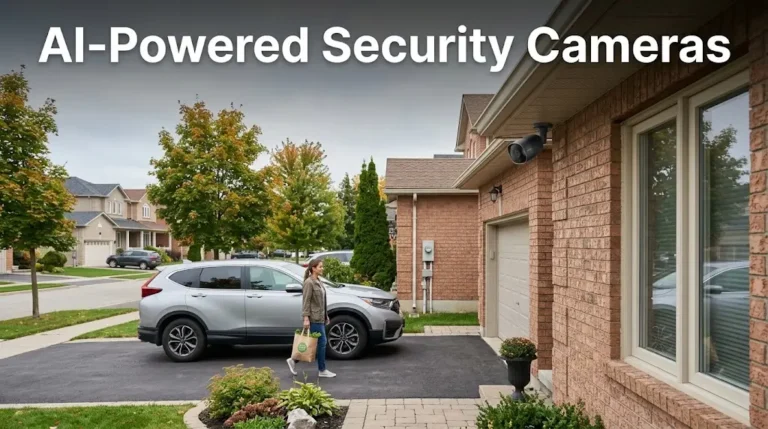
This guide to video doorbell installation in winter for Ontario explains what cold climates change and what homeowners should plan for before installation.
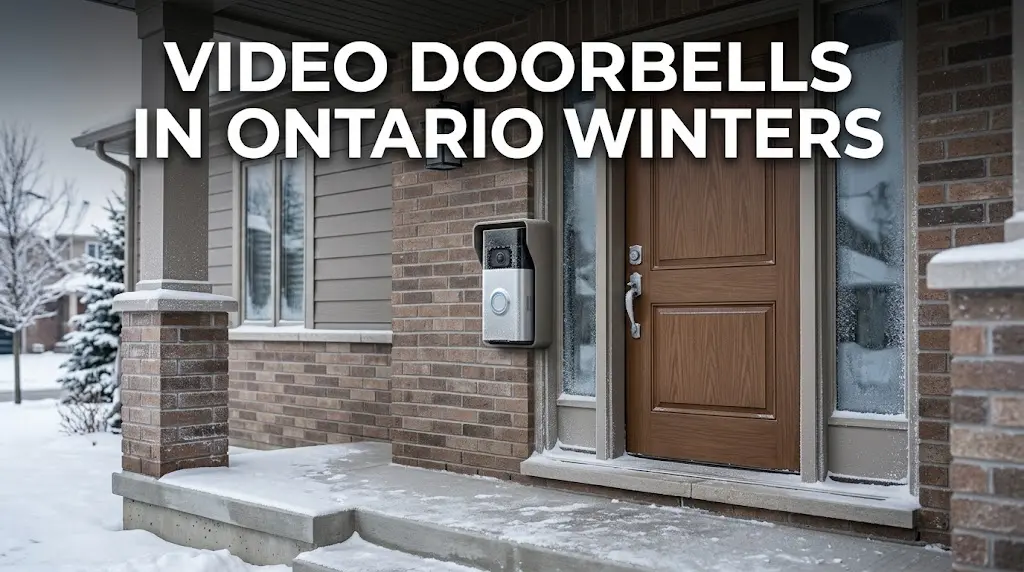
Cold weather doesn’t stop a video doorbell from working, but it changes how it should be installed, wired, and powered. In Ontario, where temperatures swing from +25°C in summer to -25°C with wind chill in January, the installation choices that work fine in a mild climate — thin gauge wiring, battery-only units, south-facing mounts with no wind break — start causing dropped notifications, dead batteries, and frozen shutters by December. Getting this right up front saves a service call in the middle of a snowstorm.
We install a lot of these units across the GTA, and the pattern is consistent: doorbells that fail in winter almost always failed because of a decision made during installation, not a defect in the hardware. Here’s what actually changes once temperatures drop, and how we account for it.
video doorbell installation in winter for Ontario
Lithium-ion batteries lose usable capacity in the cold — that’s basic chemistry, not a doorbell-specific problem. A battery-powered doorbell that lasts three months in July can drop to three or four weeks once overnight temperatures sit below -10°C for stretches, which is normal for Toronto from December through February. Motion-triggered recording draws more power per event too, because the sensor and camera have to work harder to process a clear image in low light and cold.
If a battery unit is what a homeowner wants — often for rental properties or where running wire isn’t practical — we plan for shorter charge cycles going into winter rather than letting the household discover it the hard way when a package goes unrecorded. For anyone weighing that trade-off, a hardwired video door bell Toronto install removes the battery question entirely and tends to be the better call for a primary entrance in this climate.
Wiring Matters More in the Cold Than the Doorbell Itself
Most existing doorbell wiring in older Ontario homes is 18-gauge, installed decades ago for a mechanical chime that drew almost no current. Smart doorbells draw more power, and cold temperatures increase electrical resistance, which can starve the unit of voltage right when it needs it most for continuous Wi-Fi and video processing. We test existing wiring for voltage drop before relying on it, and where it’s marginal, we run new 16-gauge wire rather than hoping the old run holds up through a cold snap.
Transformers matter too. A doorbell transformer rated right at the minimum for a given unit can underperform once the enclosure it’s mounted in (often a cold basement or unheated garage) drops in temperature. We size transformers with headroom specifically for this reason.
video doorbell installation in winter for Ontario
Mounting Position: Wind, Snow Load, and Sun Angle
Placement decisions that look fine in September can cause problems by January:
- Wind exposure — a doorbell mounted on an exposed north or west-facing wall with no overhang catches direct wind-driven snow, which can accumulate on the lens or camera housing. We look for a mounting spot under an eave or porch roof wherever the door layout allows it.
- Sun angle — winter sun sits much lower in the sky. A doorbell that had no glare issue in summer can face direct low-angle sun for hours in December, washing out the image right when someone’s at the door.
- Snow load on shelves or ledges — some doorbell mounts sit just above a small ledge or trim piece. Snow buildup there can partially block the field of view, which matters if the doorbell is also your only camera covering the front step.
This is the same logic that applies to any exterior camera in Ontario — coverage angle and mounting height determine whether the unit actually captures what it’s supposed to. If you’re also placing standalone cameras around the property, it’s worth checking /answers/how-many-meters-can-cctv-camera-cover so the doorbell and any additional cameras don’t leave gaps at the property line.
Connectivity Doesn’t Care About Temperature, But Your Router Placement Might
Cold doesn’t directly weaken Wi-Fi signal, but winter changes how houses are used — storm doors get closed, extra insulation goes up, and in some homes a router gets moved to a warmer interior room away from an unheated porch or mudroom where the doorbell’s signal has to reach. If a doorbell was borderline on signal strength in summer, it can start dropping connections once those seasonal changes happen. We check signal strength at the actual mounting point during installation, not just near the router, and add a mesh point where needed rather than leaving it to chance.
For homes running Starlink as their primary connection — increasingly common outside the downtown core where cable infrastructure is thin — winter also affects dish performance and mounting, which is worth understanding at the same time you’re planning doorbell or camera installs. We cover the details in our breakdown of what Starlink setup and installation actually cost for Ontario properties.
Cold Affects the Chime and Motor, Not Just the Camera
A detail people often miss: some smart doorbells have a mechanical element — a physical chime unit or a motorized privacy shutter — and those parts can stiffen or slow down in extreme cold, the same way a car door feels heavier at -20°C. It’s rarely a failure, just a delay. We factor this in when setting motion sensitivity and notification timing so the system still behaves predictably rather than seeming “laggy” once temperatures drop.
One Camera Isn’t a Security System
A video doorbell answers “who’s at the door,” but it doesn’t cover the driveway, backyard, or side entrances, and in winter those blind spots matter more — porch lights get used less as people come home in the dark earlier, and package theft patterns shift accordingly. Homeowners who pair a doorbell with a broader camera setup get more consistent coverage, and modern systems can distinguish a person from a passing car or blowing snow rather than triggering false alerts all night. We’ve written in depth about how that kind of motion and person detection actually works for anyone deciding whether to expand beyond a single doorbell unit.
It’s also a common question during installs: does the doorbell or any paired camera pick up audio at the door, and what does that mean for a homeowner’s privacy obligations. We answer that directly at /answers/does-cctv-camera-record-voice.
Proper video doorbell installation in winter for Ontario means planning for power, wiring, weather exposure, and connectivity before temperatures drop.
Professional Installation vs. DIY in Winter
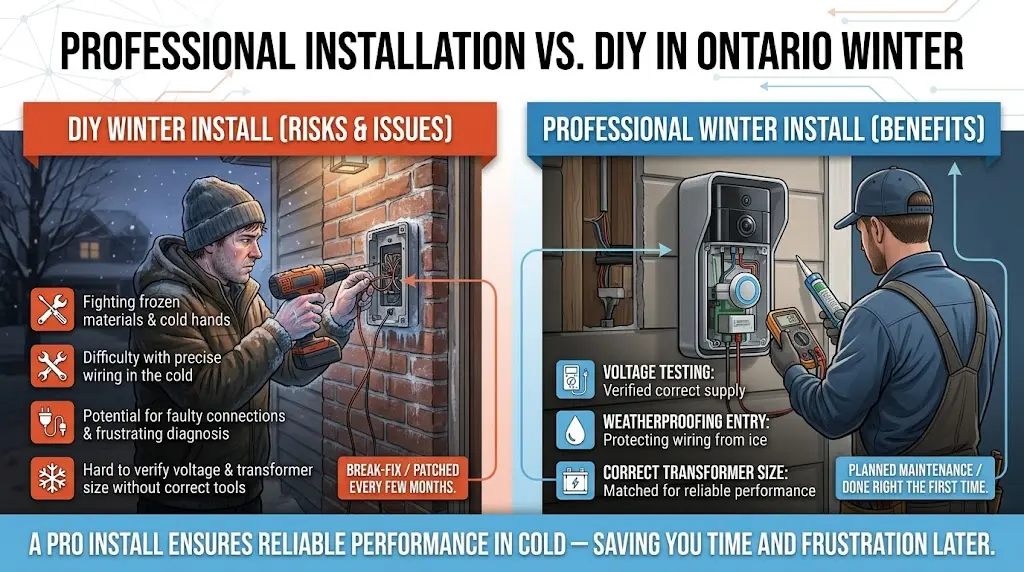
DIY doorbell installs are common in summer when the drill isn’t fighting frozen siding and the installer isn’t testing wiring with cold hands in a snowbank. In Ontario winters, a professional install matters more, not less — voltage testing, weatherproofing the wiring entry point against ice, and correct transformer sizing are all things that are hard to verify without the right tools, and mistakes here show up as intermittent failures that are frustrating to diagnose later. This is the same principle that separates reactive support from planned maintenance in other parts of home and business technology — we cover that distinction in what’s the difference between managed it services and break-fix it support, and it applies just as much to a doorbell install done right the first time versus one that gets patched every few months.
The Bottom Line
Ontario winters don’t make video doorbells unreliable — they expose installation shortcuts. Hardwiring over battery power, proper transformer sizing, wind- and sun-aware mounting, and verified signal strength at the actual install point are the difference between a doorbell that works quietly all winter and one that needs troubleshooting every cold snap. Plan for the climate during installation, not after the first freeze.
FAQ
Do video doorbells stop working in extreme cold?
Most units are rated to operate well below -20°C, so they don’t stop working outright. What actually fails is usually battery life or a marginal wiring connection, not the doorbell’s electronics themselves.
Is a hardwired video doorbell better than battery-powered for Ontario winters?
Generally yes for a primary entrance. Hardwired units avoid the reduced battery capacity that cold temperatures cause, giving continuous power and more reliable recording through the coldest months.
Where’s the best place to mount a video doorbell in a Canadian winter?
Under an overhang or porch roof that blocks direct wind-driven snow and reduces low-angle winter sun hitting the lens, while still keeping a clear, unobstructed view of the entryway.