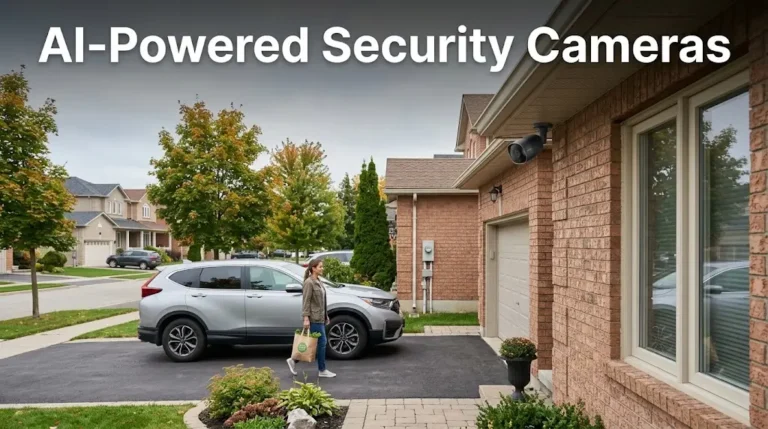
A standard CCTV camera covers between 10 and 70 meters, depending on its lens focal length, sensor quality, and lighting conditions. When determining how many meters can CCTV camera cover, indoor wide-angle cameras typically see clearly for 10–15 meters, while outdoor bullet cameras with telephoto lenses and infrared can identify subjects up to 30–70 meters away. Beyond that range, most cameras can detect movement but lack the detail to identify faces or license plates.
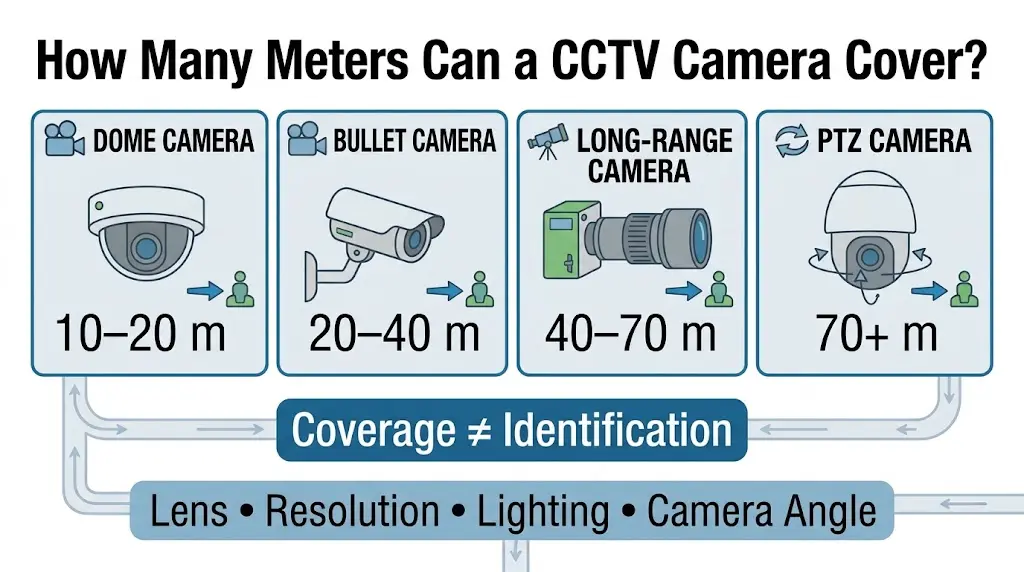
| Camera Type | Average Coverage | Best Application |
| Dome Cameras | 10–20 meters | Indoor use, retail floors, lobbies, and short-range wide coverage. |
| Bullet Cameras | 20–40 meters | Standard outdoor use, residential driveways, and small business perimeters. |
| Long-Range / Turret | 40–70 meters | Commercial parking lots, warehouse yards, and distant property fences (requires telephoto lenses). |
| PTZ (Pan-Tilt-Zoom) | 70+ meters | Active monitoring over vast areas (optical zoom reaches far distances but narrows the field of view). |
Factors Influencing How Many Meters Can CCTV Camera Cover
- Lens Focal Length: A wider lens (2.8mm) captures a broad area but makes distant objects appear smaller. A narrower lens (8mm+) sees much farther but with a tighter field of view, which is why the real decision on most sites is between widening the lens or adding a second camera.
- Sensor Resolution: Higher resolutions (e.g., 8MP vs. 2MP) place more pixels on the subject, keeping faces and license plates readable at greater distances.
- Lighting and Infrared (IR) Range: A camera rated for 30 meters in daylight may only produce identifiable footage up to 15 meters at night unless equipped with a high-powered IR array.
- Mounting Height and Angle: Mounting a camera too high or angling it straight down severely shortens its effective identification range, regardless of lens specifications.
- Detection vs Identification: Manufacturers often advertise the detection range (seeing motion). The identification range (reading a face or plate) is typically half or a third of the advertised detection distance, so it pays to know what an advertised viewing distance really means before you sign off on a quote.
Matching Coverage to Your Security Needs
To maximize how many meters can CCTV camera cover effectively across an entire property, avoid buying one camera type for every location. A front door or small retail entrance only requires an 8–15 meter range to identify visitors, which is why store camera setups across Toronto usually put short-range domes over the till and the doorway rather than anything long-range.
A commercial perimeter or warehouse yard is the opposite problem. Out there you need 40–70 meter long-range cameras to catch activity before someone reaches the building, and getting that spacing right is a site-by-site job on any commercial camera installation anywhere in the GTA.
The most effective security designs mix short-range dome cameras near entry points with longer-range bullet or PTZ units covering open areas, giving you identifiable footage at every distance without stretching any single camera past its optical limit.
Not sure where your current system falls short? We’ll walk the property, measure the actual distances, and show you what each camera can really resolve. Book a free on-site coverage assessment and we’ll map it out before anything gets mounted.